Thursday, 1 November 2012

Preliminary Research for Essay

For my Essay that I am required to write for this Semester is going to be about how family was and how it has changed in the last 50 years from the typical "Nuclear Family" to the now more common "Extended Family". Also how the roles men and women play in families.

Larry Sultan 


Vander Zee


Liz Hingley 


Flash Lighting Workshop

This is a Flash Lighting workshop we did in preparation for our Studio shoots when we bring in people from Rochester High Street. I think to improve next time we need to use a white polyboard to reflect some of the light on the shadows. Also it had shown us how to set up the equipment needed for a studio shoot and working with one light. Flash Workshop Shoot

Monday, 22 October 2012

Deconstructing Composition Task


In this Series called The Ridley Road Portrait Project by Kate Peters. She Photographs Tradespeople in Ridley Road Market, Hackney. Peters  celebrates the diversity and Multiculturalism in 21st century London. With her photographs she tries to create a lasting documentation of the Market through her Portraiture in wake of the dying high-street  small traders and traditional markets disappearing  in favour of chained stores and Supermarkets.

 In terms of Composition the work is very central in all of the pieces in this series. The viewer's eye is immediately drawn to choice of using props because the colours of the props stands out from the neutral backdrop and the clothing worn by the subjects. I think the use of props adds a deceiving  element to the photographs because without reading the story that is provided below the image a stereotypical assumption is made without looking into the context behind the images. The gaze of the subjects in the majority of this series is off camera an interesting choice made by Peters because this could be a metaphor for the loss of small independent shops in Ridley Road Market. The lighting is quite harsh in this series which I am not too keen on because it makes the photographs look like cut outs. 

Sunday, 21 October 2012

Colour Printing Workshop

This is result of the Colour Printing Workshop that I had done on Friday 12th October :


Overall, I happy with the print because the colours of the print look right, the negative is a little underexposed. However, I still need to get the borders straight on the easel which is proving to be difficult. Also I need to improve on focusing on the eyes on my subject. I think this is due to the aperture that I choose.

Wednesday, 17 October 2012

Idea for Commission Project Part 1: The Environment

My Idea for Landscape is going to be about how humans consume food, the demand for it and how producers keep up with demand by growing and producing food artificially in greenhouses rather than using traditional methods such as using the earth to produce food. I aim to show this idea visually by photographing plastic play food to emphasize this notion of artificialness.  


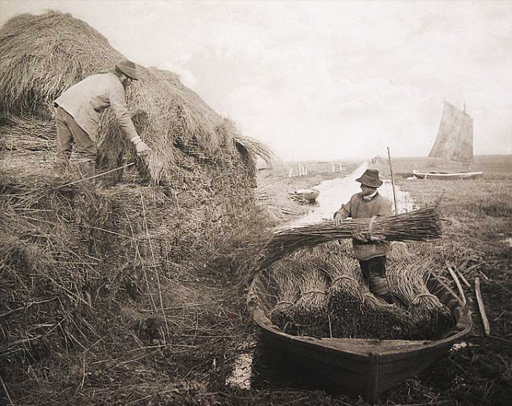
Peter Henry Emerson


The reason why I wanted to look at Emerson because his work is the anti-picturesque, like it is not about how lovely and beautiful the agricultural landscape was but it was about the hard day to day lives of farmers during that time. 
Albert-Renger Patzsch


I wanted to look at Renger Patzsch because I admire the Uniformity element in some of his photographs because of the hard lines and shapes. This is a just a visual reference of what I want my photographs to look like in terms of my idea. 


Simone Nieweg

The Lighting in this image doesn't work well with the landscape because the colours  are brown and the overcast lighting makes everything look monochrome 

I think the lighting works better with the landscape because it has more even  lighting  working with the greens. 

With the camera position  I like how she has looked down onto the landscape which shows the detail of the plants. 

In this Series "Nature-Man Made" Nieweg is interested in the small scale working on the land and the interaction between man and the land rather than industrial farming. The series has a sense of tranquillity to it because of the soft lighting used where there is no shadows or bright light. There is also a presence of man in the photographs even though there are no people in the photographs. Also I find the series quite intimate because of the choice of camera height and distance. 


I am looking at Articles about the current Food Price Crisis that is happening due to bad weather conditions this summer, how this effects farmers and more importantly how it effects us as consumers :


So far I have negotiated access to land in Broad Oak, Canterbury and a allotment near where I live which I will be test-shooting this weekend.  


I have also been inspired by the Biblical Story of Adam and Eve and researched a painter called Lucas Cranach who was a German Renaissance painter and  painted a series on Adam and Eve and The Garden of Eden:


In the series Cranach makes many visual references to himself like his monogram inscribed on the tree of knowledge combined with the lion's outwards gaze. The Animals in the painting also make a reference to Christ like how the deer and the lion living together amicably in paradise. 

Frans Snyders 


Another Painter I wanted to Research was Flemish Painter Frans Snyders who painted Still life of Animals, Fruits and Vegetables. This series of images represents the abundance and fertility of the land, the celebration of fairly modern agricultural methods but also shows the toil and hard work required to make the bountiful harvest in the top left and right hand corners. 


Monday, 15 October 2012

Deconstructing Andre Kertesz

Andre  Kertesz, Chez Mondrian, 1926
Piet Mondrian, Composition with Red, Yellow and Blue, 1930


Our initial thoughts when we first studied the photograph were loneliness this is because there is a mass emptiness within the image. This feeling is re enforced by the first part of research we did. Kertesz moved to Paris in 1925, a year before the photograph was taken. We feel the photograph reflects his loneliness because he left behind his various family members including his ‘unofficial’ fiancĂ©e, two brothers, and an uncle.

Kertesz’s photograph was influenced by Piet Mondrian, a  Dutch painter who discovered Cubism. The photograph was actually taken in Mondrian’s artist studio which features an artificial flower. Mondrian wanted to express the impression of pure reality. The artificial flower which is at the edge of the table suggests that it was moved to be in the frame of the image. We know that Mondrian would always have an artificial flower in his studio as an expression of nature, so adding the flower to Kertesz’s image is almost a nod to the original studio.

The composition of the image is divided in half, the left being the foreground and the right the background.
The left side reflects cubism, the influential movement that started in that very studio by the straight lines in the furniture and doorway. However the curves of the staircase in the background soften the profusion of right angles and straight lines, representing breaking away from a particular era which was the artistic movement in the 1920’s and keeping individuality.
The image in itself is very contrast with very subtle midtones. The only section that we notice to have any greyscale to it is the flower. The greyscale in this gives the flower more detail and more depth, purposely done along with the lighting of it to draw the eye of the viewer.

At the time the image was made Paris was being taken over by the art deco movement all very grand and a lot of decoration which is the complete opposite to what is shown of the studio, being very plain and simple. Also in Paris at this time was the demand for personal freedom, again mirroring the photographer’s decision to move to Paris on his own. 


Sunday, 14 October 2012

Seminar 3: Research Task


I am going to be comparing photographers Timothy O’ Sullivan and Edward Burtynsky for this research task. Timothy O’ Sullivan was commissioned by the US federal government to document the exploration of the American West for its untapped natural resources. In context the American-Mexican War was roughly 30 years prior to O’Sullivan’s series of the American West. His photographs portrayed somewhat the American West as picturesque because of the unspoiled landscapes. Also it is described as sublime because of the untamed, dangerous and unknown formations of the landscape. Additionally prior to the series there had been a mass migration of Americans due to “Manifest Destiny” and of European Immigrants because of the will to shake off the oppressive nature of 19th century Europe and also due to the Gold Rush in Western states like California. Scales plays an important role in his photographs because it shows the vast nature of the American West not seen before. In terms of composition the majority of O’Sullivan’s work can vary from central to spread across the frame.

Edward Burtynsky main theme for his work is how nature has been transformed through the presence of man and industrialisation in the modern wold. When I view Burtynsky’s work it provokes anger within me because it shows how man has abused the planet through pure selfish desires and deep seated greed. However, I like the uniformity element in some of his work because I perceive it as a metaphor that we are all alike in our desire to gain wealth and power. Also I think that his work is a symbol for the death of the American Dream set out in the United States roughly 60-70 years ago by the lower and middleclass because we are now running low on fossil fuels. In context his work can be referencing the power struggles between nations of the world for control of natural resources. Also his work is connected to environmental disaster stories such as the 2010 BP oil spill in the Gulf of Mexico.

The Similarity between O’Sullivan and Burtynsky are that both document the presence of Man on the Land in the American West. The differences between these photographers are that O’Sullivan’s work documents the beginnings of the Industrial revolution whereas Burtynsky’s work documents the death of Industrialisation due to economic difficulties. I believe that there is a connection between the two photographers work because Burtynsky is documenting the direct result of O’Sullivan’s documentation of the presence of man in unspoiled landscapes in extracting the natural resources.